Your pelvic floor has done something remarkable. Whether you gave birth vaginally or by caesarean, your body has been through a lot, and the muscles that support your bladder, bowel, and uterus deserve some patient, gentle attention. This guide walks you through what pelvic floor recovery actually looks like in those early weeks and months, what signs are worth taking to a professional, and how to begin moving again in a way that feels right for where your body actually is right now.
What is the pelvic floor, and why does it matter after birth?
The pelvic floor is a group of muscles and connective tissue that forms a kind of hammock across the base of your pelvis. These muscles support your pelvic organs, help control your bladder and bowel, and play a key role in core stability and sexual function. During pregnancy they carry increasing load for months on end. During birth, whether vaginal or via caesarean, they are placed under significant stress.
A vaginal birth stretches the pelvic floor tissues considerably, and tearing or an episiotomy can affect how those muscles heal. A caesarean involves major abdominal surgery, which affects the deep core muscles that work alongside the pelvic floor. So regardless of how your baby arrived, taking time to reconnect with this part of your body is worthwhile. You can read more about what your body is navigating in those early weeks in our guide to the fourth trimester.
How birth affects the pelvic floor
After a vaginal birth
During a vaginal birth the pelvic floor muscles stretch to many times their resting length. It is completely normal to feel numb, bruised, or simply disconnected from that area in the days after. Swelling, stitches, and nerve sensitivity can all make it hard to know whether your muscles are responding at all. This does not mean something is wrong. It often means your body needs time, and then gentle, consistent reconnection.
After a caesarean
A caesarean section is major abdominal surgery, and the layers of tissue cut during the procedure include the sheath that connects directly to your deep core. Even though your pelvic floor was not stretched in the same way, it still carried the full weight of your pregnancy and may have been affected by pushing before the decision to operate was made. Scar tissue around the incision site can also influence how your deeper muscles recruit and coordinate over time.
Gentle reconnection: where to begin
Before thinking about exercises, the most useful thing you can do is simply pay attention to your breath. Diaphragmatic breathing, where you allow your belly and ribs to expand fully on the inhale and gently release on the exhale, naturally coordinates with the pelvic floor. A relaxed exhale is often where early reconnection begins. There is no forcing involved.
Once you feel ready, and always after clearing any movement with your own midwife or GP, you might begin noticing gentle lift and release sensations in the pelvic floor. Think of it less as "squeezing" and more as gently drawing up, then fully letting go. The letting go is just as important as the lift. A pelvic floor that is held too tight can be just as problematic as one that is weak.
Start small. A few gentle, mindful repetitions are enough in the early days. Build from there at a pace that respects how you feel, not how long ago you gave birth.
A note on professional support: The single most useful thing you can do for your pelvic floor recovery is to see a registered women's health or pelvic floor physiotherapist. In Aotearoa New Zealand, ACC may cover some of this care if it relates to a birth injury. A pelvic floor physio can assess what is actually happening internally, identify any prolapse, tension, or coordination issues, and give you a personalised plan. You do not need to wait until something feels seriously wrong. Going early, even just for a check-in at six to eight weeks postpartum, is one of the most practical things you can do for your long-term wellbeing.
Signs it is time to see a pelvic floor physio
Some symptoms are very common after birth but are not something you simply have to live with. If you notice any of the following, a pelvic floor physio can help:
- Leaking urine when you cough, sneeze, jump, or laugh (stress incontinence)
- A strong, urgent need to use the toilet that is hard to hold off (urgency)
- A feeling of heaviness, dragging, or pressure in the pelvis or vagina (possible prolapse)
- Pain during sex after you have been cleared to resume it
- Ongoing pain around your tailbone, hips, or lower back that does not ease
- Difficulty fully emptying your bladder or bowel
These are not signs that something is permanently wrong, and they are not things you need to push through. They are your body communicating that it needs some targeted support. The practitioners who review every track in Easy Peasy include NZ-registered women's health and pelvic floor physiotherapists, so the movement you do in the app is designed with exactly this kind of sensitivity in mind.
Building back slowly: what a safe progression looks like
There is no universal timeline for returning to exercise after birth. What matters more than a date on a calendar is how your pelvic floor is actually responding. A rough framework that many women's health physiotherapists use is:
- Weeks one to six: rest, healing, and gentle breath and awareness work when you feel ready
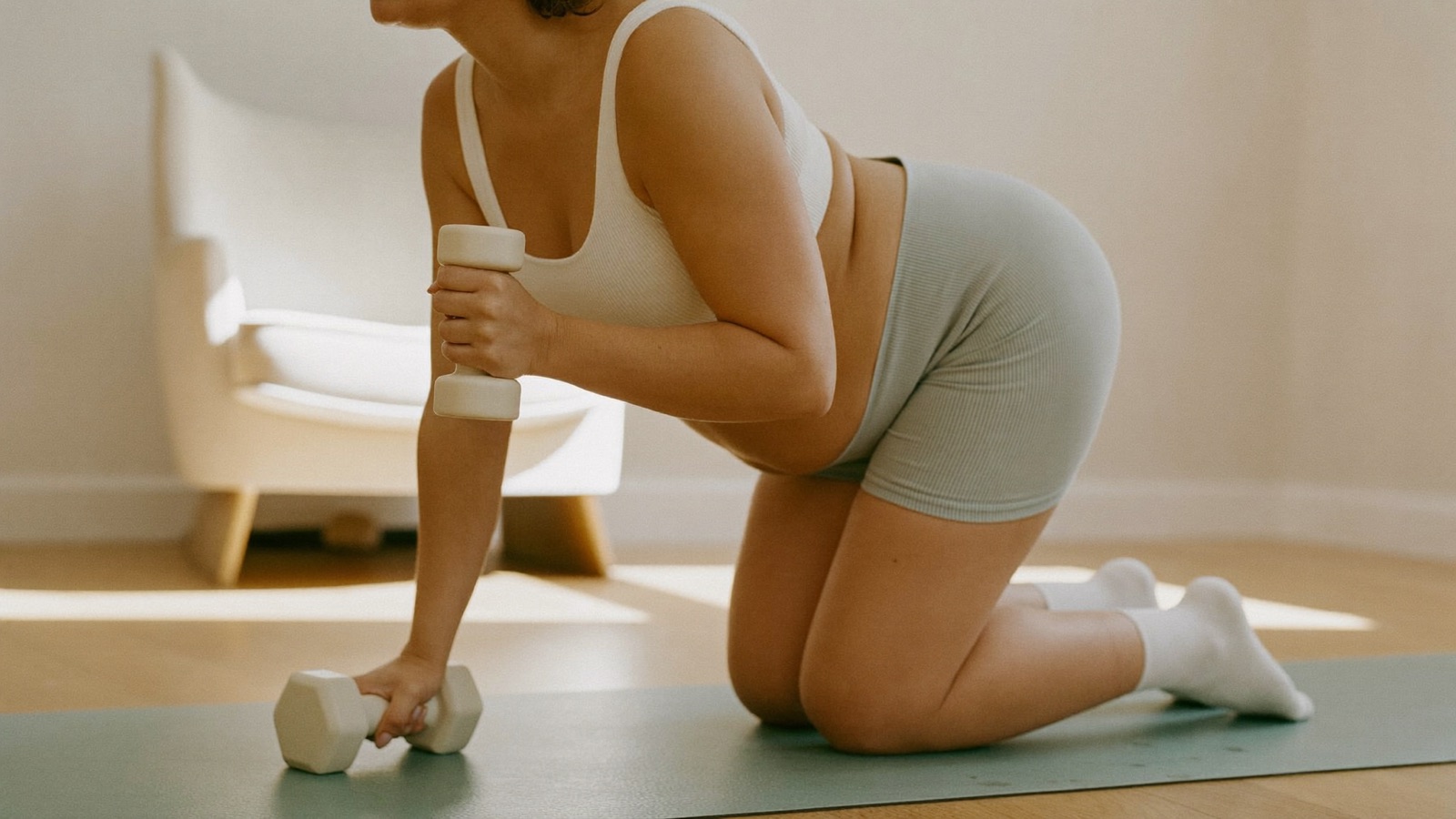
- Six weeks onwards: begin low-load movement such as walking and gentle postnatal-specific exercises, after your postnatal check
- Three to six months: progress to more dynamic movement, listening carefully to symptoms
- Six months plus: return to higher-impact activity such as running or heavy lifting, ideally after clearance from a pelvic floor physio
Signs that you may be moving ahead too quickly include increased leaking, heaviness in the pelvis, or pain during or after movement. These are not reasons to stop moving entirely. They are signals to dial back the load and get some professional guidance. Our postpartum fitness guide covers what a sustainable, body-led return to movement can look like across those first months.
You can also browse all our gentle guides for more practical, evidence-informed support written for New Zealand mums.
Common questions
How soon after birth can I start pelvic floor exercises?
Gentle breath awareness and very soft pelvic floor reconnection can often begin within the first few days, once any acute pain or swelling allows. There is no strict rule, and it is worth listening to how your body feels rather than following a fixed date. Avoid anything forceful in the early days, and always check with your midwife or GP before starting a structured movement programme. If you had a caesarean or significant tearing, a pelvic floor physio can advise on the best starting point for your specific situation.
Do I need to see a pelvic floor physio even if I feel fine?
Many women find a postnatal check with a pelvic floor physio valuable even when they have no obvious symptoms, because some issues, such as mild prolapse or coordination problems, can be present without obvious signs. Think of it the way you would a dental check-up rather than an emergency appointment. It is preventive, informative, and often reassuring. In New Zealand you can ask your GP or midwife for a referral, or self-refer to a private women's health physiotherapy clinic.
Is leaking urine after birth normal?
Leaking is very common after birth, particularly with a first vaginal birth, but common does not mean you have to accept it as permanent. Many women see significant improvement with targeted pelvic floor rehabilitation. If you are leaking, it is a good reason to see a pelvic floor physio sooner rather than later, because early intervention tends to give better outcomes. It is also worth knowing that leaking does not always mean your pelvic floor is weak. Sometimes it is related to muscle tension or coordination, which is why a professional assessment is so helpful.
Can Easy Peasy help with postnatal pelvic floor recovery?
Easy Peasy's tracks are reviewed by NZ-registered women's health and pelvic floor physiotherapists and are designed to meet you where your body is, without pressure or guilt. The app is not a replacement for one-on-one care from a physio, and if you have symptoms we encourage you to seek that support. But as a daily companion for calm, considered movement, it is built with postnatal bodies in mind. If you are ready to move gently and consistently, start gently with Easy Peasy and see how your body responds.